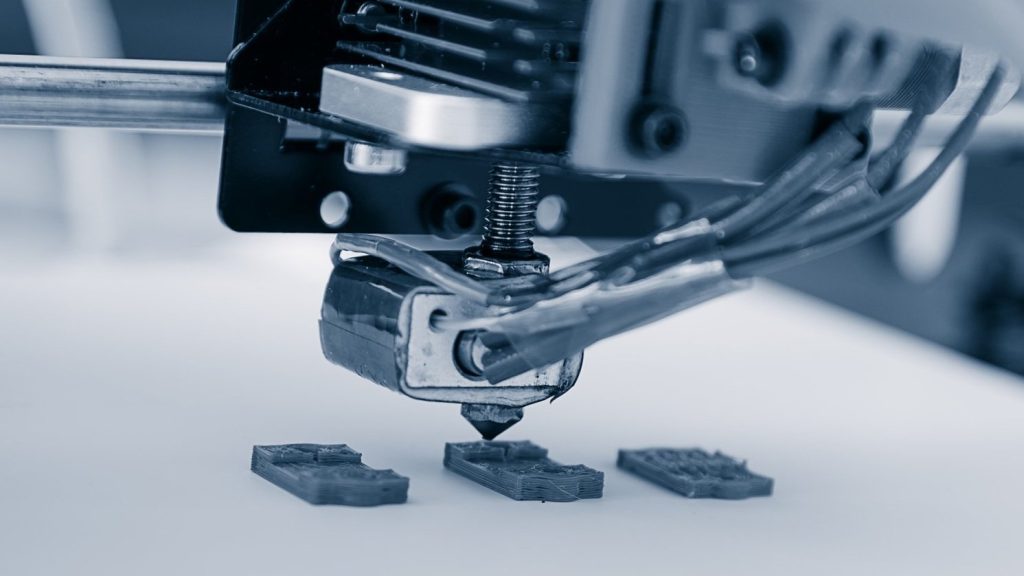
For over 50 years, the rules of engineering have been dictated by the limitations of the mill and the lathe. Engineers are taught from day one to think in terms of “how do I cut this away?” This subtractive mindset has become so ingrained that even when moving to Additive Manufacturing (AM), many designers are still subconsciously designing for a CNC machine.
The problem? Designing a 3D-printed part like a machined part doesn’t just limit performance; it significantly inflates your cost per part. If you want to realize the full value of 3D printing, you have to break these three common “subtractive habits.”
1. The Trap of Blocky Geometries
In CNC machining, a rectangular block is the cheapest starting point. Removing only what is necessary saves machine time. In Additive Manufacturing, the opposite is true. Every cubic centimeter of material you “save” by leaving the part blocky actually costs you money in resin or powder.
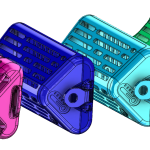
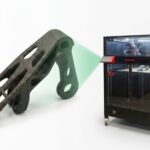
Designing for AM requires a “generative” mindset. Instead of starting with a block and cutting holes, you should start with the load paths and only add material where the physics demands it. By “shelling” out thick sections or using lattice structures, you reduce material consumption and shorten build times, directly lowering your invoice.
2. Unnecessary Fillets and Radii
In the subtractive world, internal fillets are a byproduct of a spinning drill bit or end mill. Designers often add them to every corner by default. When 3D printing, especially with processes like HP Multi Jet Fusion (MJF), these fillets can actually be a liability.
Large, decorative fillets increase the “thermal mass” of a specific area. In high-performance polymers, inconsistent thermal mass leads to uneven cooling, which can cause warping or dimensional inaccuracies. Unless a radius is serving a specific structural purpose for stress distribution, “over-filleting” a part just adds unnecessary weight and cooling complexity.
3. Ignoring the Power of Part Consolidation
A hallmark of subtractive design is the assembly. Because a mill can only reach so many angles, complex systems are broken down into ten different parts held together by fasteners, seals, and welds. This creates a massive “hidden cost” in inventory management and labor.
When you stop designing for CNC, you stop designing assemblies. Additive Manufacturing allows you to consolidate those ten parts into a single, seamless geometry. This eliminates failure points like leaking seals or vibrating bolts and wipes out the labor cost of assembly. If your 3D-printed part still requires a bag of screws to function, you’re likely still designing with a subtractive mindset.
The Shift to DfAM (Design for Additive Manufacturing)
Breaking 50 years of habits isn’t easy, but it is necessary for high-performance production. At Tronix3D, our engineers specialize in DfAM reviews. We don’t just print your file; we look for these subtractive hangovers that are driving up your costs.
By identifying where you can reduce material, optimize for thermal cooling, and consolidate assemblies, we help you move from a “printable” part to a “producible” industrial component that is lighter, stronger, and more cost-effective than its machined predecessor.
Stop paying the “subtractive tax” on your additive projects. If you are ready to optimize your designs for production-grade polymers or titanium, contact the engineering team at tronix3d.com/contact-us to start a technical design review.