For decades, titanium has been the “holy grail” of industrial materials. Known for its incredible strength-to-weight ratio, corrosion resistance, and biocompatibility, titanium (specifically the Ti6Al4V alloy) is the gold standard for aerospace, defense, and medical applications. However, until recently, producing titanium parts via additive manufacturing was a luxury reserved for high-budget, “blank-check” aerospace programs. The high cost of Laser Powder Bed Fusion (LPBF) systems and the intense facility requirements made it inaccessible for the broader market.
What is Cold Metal Fusion (CMF)?
To understand why CMF is important, we have to look at how it differs from traditional metal 3D printing. Most people are familiar with Direct Metal Laser Sintering (DMLS), which uses high-powered lasers to melt metal powder layer by layer. While effective, DMLS requires specialized gas environments, intense safety protocols, and a massive capital investment.
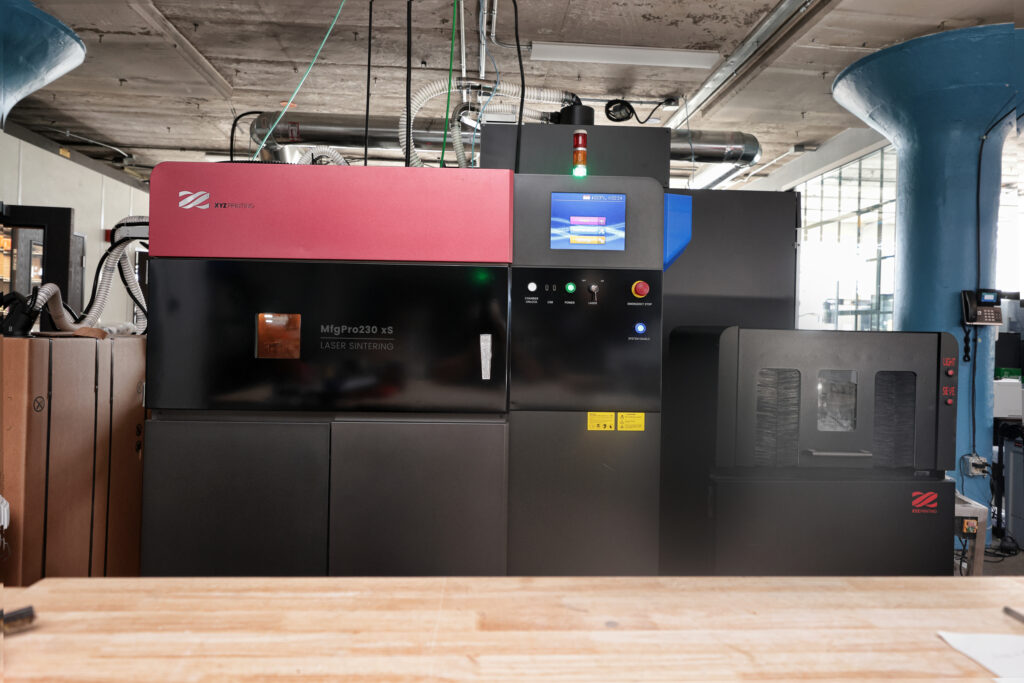
Cold Metal Fusion takes a different approach. It is a process that effectively “borrows” the workflow of Selective Laser Sintering (SLS) but applies it to metal.
The Process: From Green to Silver
The CMF workflow involves a specially engineered feedstock consisting of metal powder (like Ti6Al4V) encapsulated in a polymer binder.
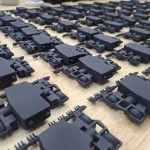
- The Build: The part is printed on a standard, industrial-grade sintering system at relatively low temperatures (hence “Cold” Metal Fusion). This creates what we call a “Green Part”, a component that has the shape of the final product but is held together by the polymer binder.
- Debinding: The Green Part undergoes a chemical or thermal process to remove the polymer binder, leaving behind a porous “Brown Part.”
- Sintering: Finally, the Brown Part is placed in a high-temperature vacuum furnace. The metal particles fuse together, resulting in a fully dense, high-performance titanium component.
This decoupled process, separating the “printing” from the “metallurgy”, is what makes the technology so scalable and cost-effective compared to traditional laser-based systems.
Titanium (Ti6Al4V): The Mission-Critical Standard
Titanium Grade 5 (Ti6Al4V) is the most widely used titanium alloy for a reason. It offers a unique combination of mechanical properties that few other materials can match:
- High Specific Strength: It is significantly lighter than steel but just as strong, making it indispensable for weight-sensitive aerospace and robotics applications.
- Corrosion Resistance: It forms a stable, protective oxide layer, making it immune to many acids and saltwater environments.
- Fracture Toughness: Unlike some high-strength polymers, titanium can withstand extreme mechanical stresses and thermal cycles without cracking.
By making this material accessible through CMF, Tronix3D is helping engineers move beyond “low-performance” plastic prototypes and straight into end-use metal hardware.
The Surge of Generative Titanium Design
The true power of 3D printing titanium isn’t just making a part you could have machined; it is making a part that is impossible to machine. This has led to a surge in Generative Design.
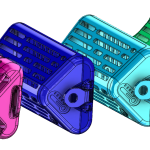
Generative design uses AI algorithms to optimize a part’s geometry based on specific constraints: weight, stress loads, and attachment points. The result is often an “organic” or “bionic” look, characterized by complex lattice structures and hollow internal channels.
Lattices and Weight Optimization
In aerospace and defense, every gram counts. Generative design allows us to “lattice” the interior of a titanium bracket. Instead of a solid block of metal, the algorithm creates a complex web of struts that provide strength only where the stress is actually applied.
Thermal Management
One of the most exciting applications of Generative Titanium Design is in heat exchange. Because CMF can print complex internal channels, engineers can design heat sinks and fluid manifolds that follow the organic contours of an engine or an electronics housing. These “conformal” channels provide far superior cooling efficiency compared to straight-line holes drilled by a CNC mill.
Industry Applications for CMF Titanium
Because Cold Metal Fusion bridges the gap between prototyping and mass production, we are seeing adoption across several key sectors:
1. Aerospace and Defense
In the defense sector, the need for “Just-in-Time” spare parts for legacy aircraft is a major pain point. CMF allows for the rapid production of flight-ready titanium components without the need for expensive forging or casting dies. From drone frames to sensor mounts, titanium CMF provides the durability needed for the battlefield.
2. Robotics and Automation
Robotic arms require low inertia to move quickly and accurately. By using generatively designed titanium parts, robotics companies can reduce the weight of end-of-arm tooling while maintaining the stiffness required to handle heavy loads.
3. Energy and Chemical Processing
In the oil and gas industry, components are often exposed to highly corrosive fluids at high temperatures. Titanium CMF valves and connectors provide a long-lasting solution that reduces maintenance intervals and prevents catastrophic leaks.
The Economic Shift: From Prototyping to Production
The most significant change brought by Cold Metal Fusion is the Cost Per Part. With traditional DMLS, the costs were so high that the technology was only used when there was literally no other way to make the part. With CMF, the economics shift. Because the printing happens on standard industrial hardware and multiple parts can be sintered in a single furnace batch, the cost of titanium production has dropped significantly.
This makes it viable for low-to-mid volume production. A company that needs 50 or 500 titanium brackets no longer has to choose between a $50,000 CNC bill or an $80,000 DMLS quote. CMF offers a middle path that provides high-performance metal at a production-friendly price point.
DfAM: Engineering for the CMF Workflow
Success with Cold Metal Fusion requires a specialized approach to Design for Additive Manufacturing (DfAM). Because the part undergoes a sintering process where it shrinks by a predictable percentage (typically around 15-20%), the engineering must be precise.
At Tronix3D, our engineers work closely with clients to:
- Compensate for Shrinkage: Scaling the digital model to ensure the final, sintered part meets exact tolerances.
- Optimize Support Structures: Ensuring the Green Part remains stable during the printing phase.
- Material Selection: Confirming that Ti6Al4V is the optimal choice for the specific thermal and mechanical loads of the application.
2026 and Beyond: The Future of Titanium
The rivalry between additive and subtractive manufacturing is over. We now live in a world of Hybrid Workflows, where CMF is used to create the complex, near-net shape of a titanium part, and CNC milling is used only to finish the most critical mating surfaces.
Cold Metal Fusion has successfully democratized one of the world’s most advanced materials. Titanium is no longer an “exclusive” material; it is a tool in the toolbox of every engineer who needs reliability, performance, and weight reduction.
Partner with Tronix3D for Metal Additive Excellence
At Tronix3D, we pride ourselves on being more than just a print service. We are an engineering partner located in the heart of Pittsburgh’s manufacturing corridor. Our expertise in Cold Metal Fusion and DfAM allows us to help your team move from a concept to a mission-critical titanium part in record time. Get in touch today to find the right solution for your project.