In the aerospace, defense, and robotics sectors, “time to market” is a primary competitive advantage. Whether you are replacing a legacy part for a grounded aircraft or iterating on a new robotic actuator, project speed often hinges on the speed of your quote.
At Tronix3D, we have optimized our workflow for rapid, engineering-backed pricing. To help our engineers deliver a fast, production-ready quote, include these four critical details in your next Request for Quote (RFQ).
1. High-Quality STEP Files
While STL files are common, they are “mesh” files that lack the mathematical precision of a true CAD model. If you don’t have a STEP file, we can still work with whatever CAD file you have, but STEP files are the industrial gold standard.
They allow our engineers to perform precise geometry assessments, measure wall thicknesses, and check tolerances for threaded inserts. High-quality data eliminates back-and-forth emails, shaving hours or even days off the quoting process.
2. Quantity and Lead Time
Are you looking for a single “form and fit” prototype or a low-volume run of 5,000 production parts?
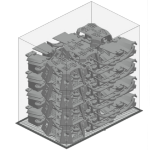
Defining quantity upfront allows us to recommend the most cost-effective path. A single prototype might be perfect for mSLA, while 1,000 parts are better suited for the high throughput of HP Multi Jet Fusion (MJF). Clear lead times also allow us to verify machine capacity and material availability immediately.
3. Material and Process Specification
Your material choice dictates the entire production workflow. If your requirements are set, please specify what you need.
- HP MJF: For production-grade, isotropic polymer parts.
- Cold Metal Fusion: For high-strength Titanium (Ti6Al4V) components.
- Super Polymers: For high-heat or chemical-resistant applications using PEEK, Carbon PEEK, or ULTEM™ 9085.
If you are unsure, tell us your application. Whether the part faces jet fuel exposure, high vibrations, or temperatures above 200°C, our engineers will recommend the best path for functionality and cost.
4. Post-Processing and Assembly
A raw print is rarely the final step for mission-critical hardware. To provide an accurate total cost, we need to know your finishing requirements:
- Vapor Smoothing: For airtight seals and improved surface finish.
- Dyeing and Finishing: For aesthetic consistency or Cerakote requirements.
- Mechanical Integration: Requirements for threaded inserts or secondary CNC machining for micrometer-perfect tolerances.
Better Inputs = Better Outcomes
The difference between a “print service” and an engineering partner is the level of scrutiny applied to your RFQ. Providing these details upfront allows the Tronix3D team to move past basic pricing and into meaningful Design for Additive Manufacturing (DfAM) feedback.
Ready to start your next project? Ensure your project moves at maximum speed by requesting your quote here.