For a long time, the engineering decision-making process was straightforward: if a part faced mission-critical loads or extreme temperatures, you reached for aluminum or titanium. It was the safe bet, backed by decades of heritage data. However, that traditional “metal-first” mindset is now often becoming a liability.
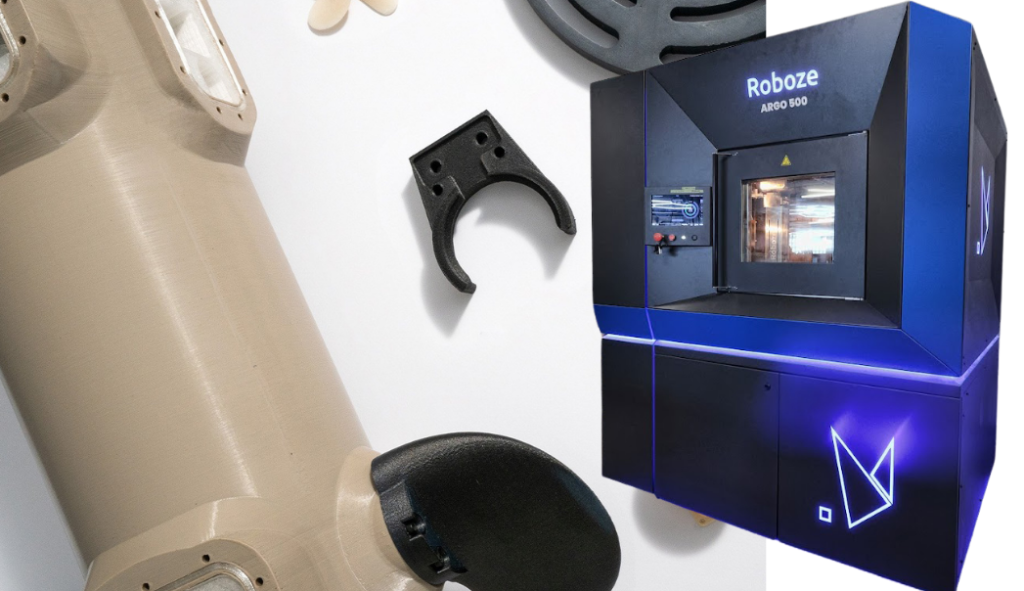
At Tronix3D, we are seeing a fundamental shift in how aerospace and defense teams approach material selection. The rise of high-performance super polymers, specifically PEEK, Carbon PEEK, and ULTEM™ 9085, has introduced a new tier of engineering materials that challenge the dominance of alloys. These aren’t just plastic parts; they are advanced thermoplastics capable of surviving environments that would compromise traditional metals.
The Weight Equation: Why Every Gram is a Target
In sectors like UAV development and satellite manufacturing, weight is the primary constraint on performance. When you compare the density of 6061 Aluminum (2.7 g/cm³) or Ti6Al4V Titanium (4.4 g/cm³) to a material like PEEK (~1.3 g/cm³), the math becomes impossible to ignore.
By pivoting to a super polymer, engineers can achieve weight savings of 50% to 60%. For a drone fleet, this isn’t just a marginal gain; it translates directly into a 20% increase in flight time or the ability to carry more sophisticated sensor payloads. At Tronix3D, we focus on helping you find that “sweet spot” where you can shed mass without sacrificing structural integrity.
Navigating the High-Performance Polymer Lineup
Choosing between these materials requires a nuanced understanding of your operating environment. At Tronix3D, we offer three primary pathways for high-performance applications:
- PEEK (Polyether ether ketone): The industrial workhorse, prized for its continuous service temperature of 260°C. It retains mechanical properties under thermal and chemical stress that would cause aluminum to creep.
- Carbon PEEK: Standard PEEK reinforced with carbon fiber. This is our go-to for components requiring maximum rigidity, improved thermal conductivity, and wear resistance under high mechanical loads.
- ULTEM™ 9085 (PEI): Specifically engineered for FST (Flame, Smoke, and Toxicity) compliance. It meets strict FAA and DoD safety mandates (FAR 25.853), making it a requirement for aircraft ducting and electrical housings.
Chemical Resilience Without the Coatings
One of the hidden costs of metal parts is the secondary processing required to survive harsh environments. Aluminum often needs expensive anodizing or specialized coatings to resist jet fuel, hydraulic fluids, or salt spray. Super polymers, by contrast, are virtually inert.
In sub-sea or chemical processing applications, PEEK components frequently outlast coated metal parts by a factor of 3x or 5x. This inherent corrosion resistance eliminates the risk of coating failure and significantly reduces the long-term maintenance burden for the end-user.
Balancing Performance: When Metal Still Wins
As an engineering-driven partner, we are the first to admit that polymers aren’t a universal replacement. We typically advise sticking with metal in the following scenarios:
- Extreme Heat: For sustained operation consistently above 300°C, the thermal ceiling of titanium is still necessary.
- Surface Hardness: Applications involving high-friction, grinding interfaces, like gear teeth, require the Rockwell hardness of metal.
- Conductivity: If a part must act as a primary electrical ground or a high-efficiency thermal heat sink, polymers (which are natural insulators) are not the right fit.
Your Engineering Partner in Pittsburgh
Tronix3D serves as an extension of your design team, helping you navigate the complexities of Design for Additive Manufacturing (DfAM). Our goal is to move your project from CAD to a flight-ready part in days, allowing you to iterate and validate your designs at a pace that traditional CNC machining simply cannot match.
If your project is currently over-engineered for metal, let’s talk. We can analyze your thermal and mechanical loads to determine if a super polymer switch is the right move for your mission.
Ready to light-weight your next project? Talk to our engineers at https://tronix3d.com/contact-us to review your CAD files or request a technical quote for your low-to-mid volume production needs.