As demand for agile, high-performance manufacturing grows, additive manufacturing (AM) continues to expand its role in solving complex engineering challenges. For industries like aerospace, defense, medical, and robotics, 3D printing is more than a prototyping tool—it’s a production-grade solution.
Here are five professional trends that are redefining the potential of industrial 3D printing.
1. Production-Grade Polymers Are Replacing Metals
High-temperature thermoplastics like PEEK, PEKK, and ULTEM™ are seeing wider adoption as lightweight, corrosion-resistant alternatives to metal components. These super polymers offer outstanding strength-to-weight ratios, making them ideal for aerospace brackets, medical devices, and structural components in defense systems.
Fused Filament Fabrication (FDM) platforms capable of processing these materials are helping reduce part weight without compromising durability—particularly valuable for applications where fuel efficiency, portability, or sterilization is a concern.
2. Cold Metal Fusion Expands Titanium Printing Capabilities
Traditionally, Direct Metal Laser Sintering (DMLS) has dominated titanium printing, but Cold Metal Fusion (CMF) is emerging as a scalable, lower-cost alternative. By combining SLS-based powder bed fusion with post-sinter processing, CMF enables production of precision titanium parts like aerospace mounts, surgical tools, and robotics joints with minimal thermal distortion.
CMF allows for complex geometries and high-performance results while increasing throughput and lowering cost per part—ideal for short-run production in regulated industries.
3. Supply Chain Resilience Through Digital Inventory
Across defense and industrial manufacturing, AM is playing a pivotal role in addressing spare and legacy part challenges. Rather than relying on long-lead-time tooling or obsolete components, manufacturers are building digital inventories of validated 3D-printable designs.
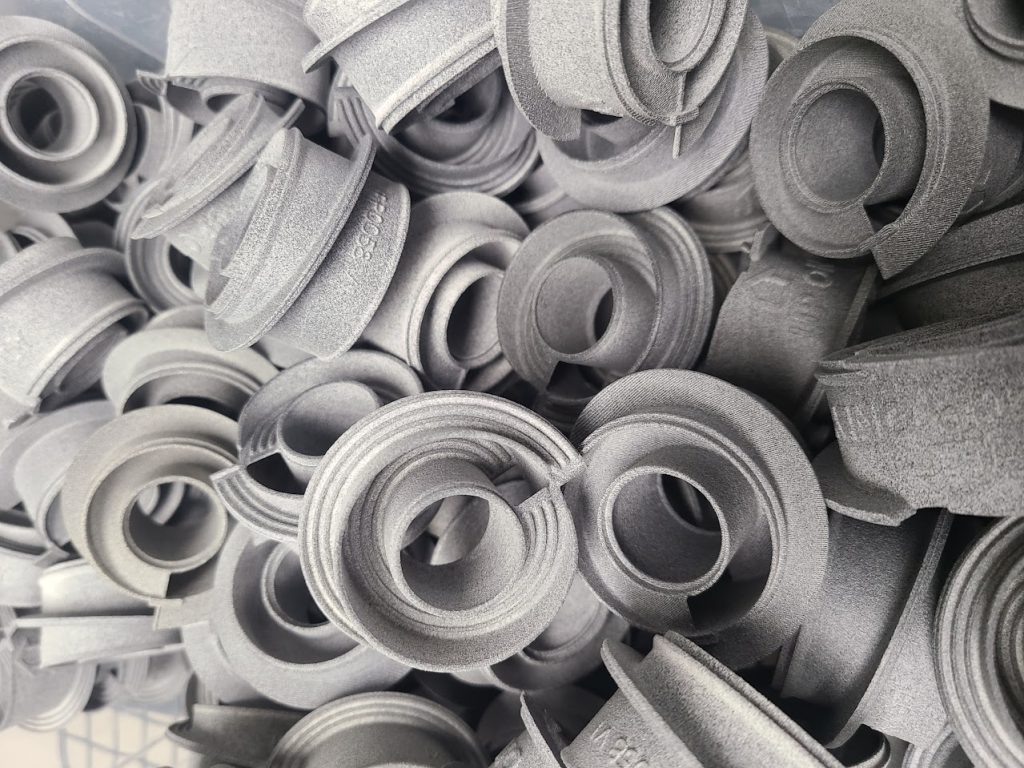
With technologies like HP Multi Jet Fusion (MJF), teams can produce on-demand replacement parts with tight tolerances and repeatable mechanical performance. This digital manufacturing model is particularly valuable for field maintenance and sustainment operations.
4. Micro-Precision with mSLA for Electronics and MedTech
Masked Stereolithography (mSLA) is proving to be a valuable tool in applications requiring high resolution and fine detail. From medical connectors to custom enclosures for IoT devices, mSLA delivers surface finishes and dimensional accuracy that rival injection molding—without tooling costs.
Its rapid cycle time and material versatility also make it well-suited for prototyping and low-volume runs in MedTech and electronics.
5. Growth of DFAM Expertise and End-to-End Partnerships
Design for Additive Manufacturing (DfAM) is becoming a critical differentiator for OEMs. Engineering teams are leveraging additive not just to make parts, but to rethink how components are structured, assembled, and function.
Tronix3D supports this shift by combining deep technical expertise with agile production capabilities, guiding clients from concept to production with a focus on manufacturability and performance. With tight integration between design and fabrication, AM delivers faster development cycles and higher-value outcomes.
Looking Ahead
The additive manufacturing landscape is no longer about “what can be printed.” It’s about how 3D printing can solve core engineering problems faster, lighter, and more affordably. Whether optimizing aerospace components, ruggedizing military hardware, or iterating medical devices, the future of professional AM lies in targeted applications, technical materials, and smart design.
Ready to explore how these trends can support your next project? Contact Tronix3D to learn how we partner with engineers and innovators across industries to bring high-performance solutions to life.