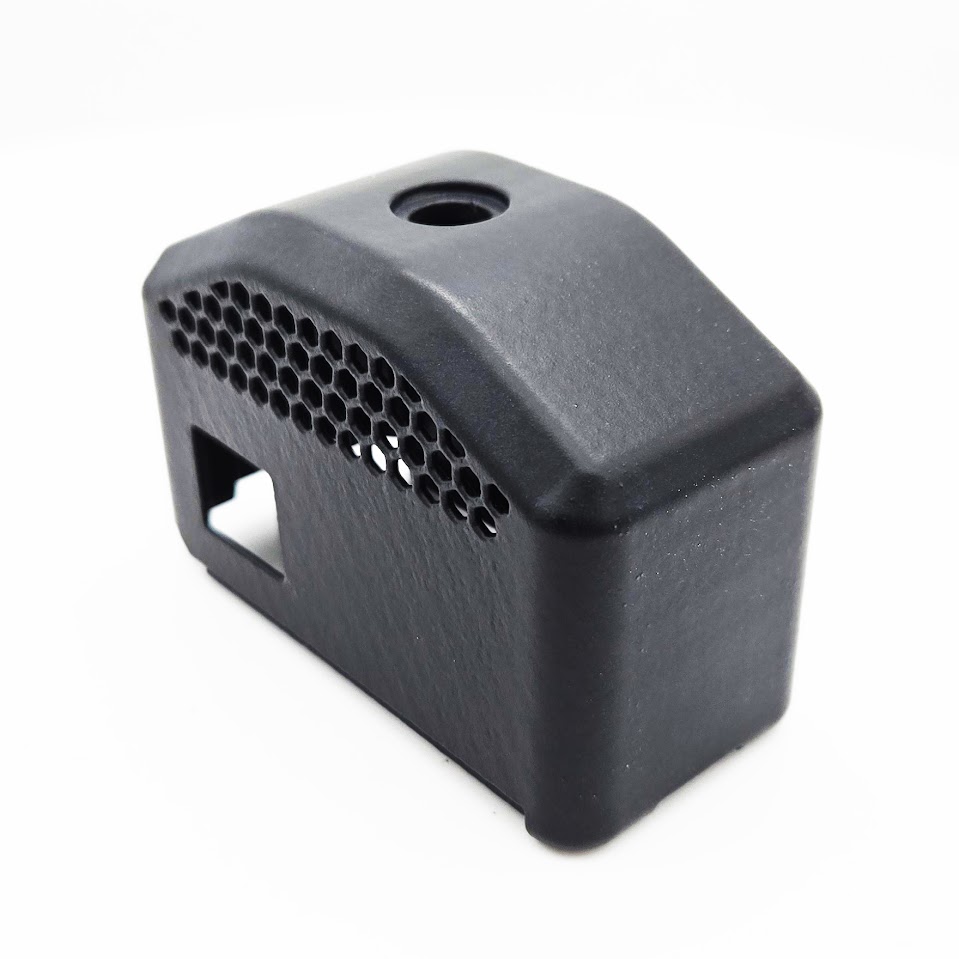
Surface finish can make or break a 3D-printed part. While additive manufacturing delivers complex geometries and production-ready strength, the raw surface often requires refinement for functional or cosmetic applications. Vapor smoothing is one of the most effective finishing processes for polymer parts, enhancing both performance and appearance without compromising accuracy.
What Is Vapor Smoothing?
Vapor smoothing exposes a printed part to controlled solvent vapors that soften the outermost surface layer. This process levels microscopic peaks and valleys, creating a uniform, sealed finish. Unlike manual sanding or tumbling, vapor smoothing reaches every surface, even intricate internal channels, while preserving fine details and dimensional tolerances.
The result: parts that look and perform like injection-molded components, but with the design freedom of additive manufacturing.
Key Benefits of Vapor Smoothing
- Improved Surface Quality – Achieves smooth, glossy finishes that are visually appealing and reduce friction.
- Enhanced Strength & Durability – The sealed surface improves mechanical performance by reducing stress concentrators that can lead to cracks or failures.
- Chemical & Moisture Resistance – By sealing pores, vapor smoothing prevents liquid absorption and enhances resistance to oils, greases, and chemicals.
- Consistent Finish for Complex Geometries – Internal channels, lattice structures, and difficult-to-reach areas are smoothed uniformly.
Use Cases Across Industries
Aerospace and Defense
Weight-optimized components often rely on lattice structures and complex geometries. Vapor smoothing ensures aerodynamic and fluid-dynamic performance by reducing drag and sealing pores, while still maintaining the lightweight design intent.
Automotive
Functional enclosures, ducts, and interior components benefit from aesthetic appeal and chemical resistance. Vapor-smoothed polymer parts resist exposure to fuels and lubricants while maintaining a professional, production-grade appearance.
Consumer Products
For products that need to look as good as they function, such as electronics housings, sports equipment, and wearables, vapor smoothing gives parts a polished finish that rivals injection molding, supporting both low-volume production and prototyping.
Robotics and Industrial Applications
In robotics and manufacturing equipment, vapor smoothing improves mechanical reliability and part longevity. Smoothed parts are less prone to cracking under stress, and sealed surfaces prevent contamination in sensitive environments.
Vapor Smoothing as Part of an End-to-End Workflow
At Tronix3D, vapor smoothing is integrated with advanced technologies like HP Multi Jet Fusion to deliver end-use parts that are not only strong and dimensionally accurate but also ready for deployment in demanding environments. This post-processing step bridges the gap between additive prototypes and production-quality components.
Conclusion
Vapor smoothing transforms raw 3D-printed parts into high-performance, production-ready components. By improving durability, sealing surfaces, and elevating aesthetics, it expands the range of applications across aerospace, defense, medical, automotive, consumer goods, and industrial robotics.
Ready to see what vapor smoothing can do for your parts?
Connect with Tronix3D to explore how our finishing services can enhance your next project. Contact us today to get started.