As additive manufacturing (AM) technologies evolve, so does the importance of Design for Additive Manufacturing (DfAM). More than just a buzzword, DfAM is the strategic process of designing parts specifically to leverage the benefits of 3D printing, rather than treating it as a direct replacement for traditional methods like machining or injection molding.
For engineers and product teams, working with a manufacturing partner who prioritizes DfAM can make the difference between a functional prototype and a scalable, optimized final product.
What Is DfAM?
Design for Additive Manufacturing involves engineering parts that are purpose-built for the capabilities and limitations of 3D printing processes. This includes design decisions around:
- Wall thickness and feature resolution
- Overhangs and support-free geometries
- Consolidating assemblies into a single part
- Material-specific constraints (e.g., anisotropy, thermal behavior)
The goal is to create components that are not only printable but also stronger, lighter, more cost-effective, and easier to scale.
The Benefits Go Beyond Manufacturability
While most engineers associate DfAM with printability and lightweighting, there are lesser-known advantages to working with a DfAM-savvy partner:
1. Functional Part Consolidation
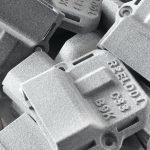
Rather than producing and assembling five separate components, DfAM enables the consolidation of complex assemblies into a single part. This eliminates fasteners and reduces potential points of failure. Fewer parts also means reduced inventory, simplified BOMs, and faster production cycles.
2. Improved Performance Through Geometry
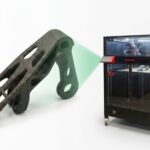
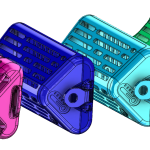
Additive allows for lattice structures, internal channels, and topology-optimized designs that are impossible or cost-prohibitive to machine. These geometries improve cooling, reduce weight, and enhance strength-to-weight ratios without additional material use.
3. Accelerated Iteration and Fewer Prototypes
By aligning early-stage designs with AM principles, teams reduce the number of physical prototypes needed before reaching production. This cuts down on delays, lowers material waste, and speeds up time to market.
4. Lower Lifecycle Costs
DfAM reduces the need for tooling, molds, and fixturing. It also supports easier maintenance and replacement through digital inventory and on-demand production. When combined with reverse engineering or 3D scanning, DfAM also supports sustainment efforts for obsolete or legacy parts.
Industry Applications of DfAM
Across sectors like aerospace, medical, robotics, and defense, DfAM is enabling production-grade parts with increased functionality:
- Aerospace: Weight reduction through hollow or lattice-filled components
- Medical: Custom-fit surgical guides and anatomical models
- Defense: Field-replaceable ruggedized enclosures with integrated hardware
- Robotics: Parts optimized for shock resistance and space constraints
Why Work With a DfAM-Focused AM Partner?
Many 3D printing services can print a CAD file. Far fewer can collaborate to optimize that file for cost, strength, and manufacturability.
Tronix3D, for example, offers DfAM consulting as part of its core capabilities. By combining technical design insight with direct access to technologies like HP Multi Jet Fusion (MJF), high-temp FDM, resin-based mSLA, and titanium Cold Metal Fusion, their team helps engineers avoid trial-and-error cycles while achieving optimal part performance.
Final Thoughts
Design for Additive Manufacturing isn’t just about getting a part to print. It’s about understanding how material, geometry, and process intersect, and how to engineer for that intersection.
If you’re looking to reduce weight, consolidate parts, or increase functionality, it’s time to look beyond traditional CAD and toward design strategies built specifically for additive.
Interested in exploring what DfAM can do for your product line? Contact Tronix3D to speak with an engineer and start optimizing your next build.